How Small Businesses Can Actually Use Google’s Universal Commerce Protocol
This week, Google announced the Universal Commerce Protocol (UCP), and if you sell anything online, this is for you. Let me break down what it actually means and how you’ll use it.
Key Points
- UCP is Google's new protocol that connects AI assistants directly to your checkout system so customers can buy through conversations.
- Small businesses win by competing on expertise and curation when customers ask specific questions, not just by having the lowest price.
- Early adopters learn conversational commerce now while competitors wait, starting with Google Merchant Center and the UCP waitlist.
This week, Google announced the Universal Commerce Protocol (UCP), and if you sell anything online, this is for you. Let me break down what it actually means and how you’ll use it.
The ELI5 Breakdown: What Is UCP?
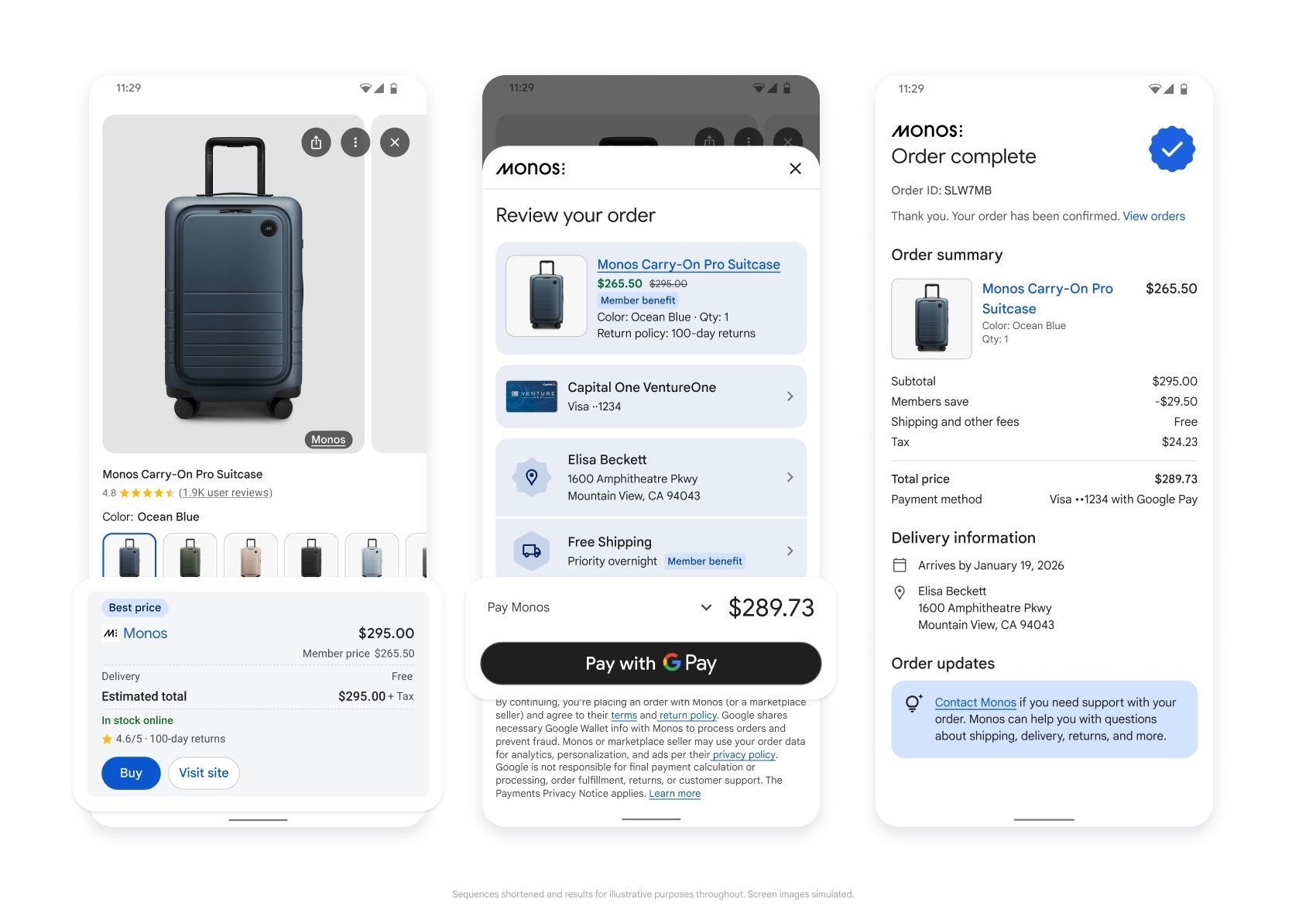
Here’s the simplest way to understand it: Right now, when someone asks Google or Gemini “what’s the best wireless headphones for working out?”, they get links to click. With UCP, the AI can now complete the entire sale right there in the conversation. It answers their questions, shows them your products, applies discount codes, and processes checkout without them ever leaving that chat.
You stay in control. You’re still the merchant of record. You keep all your customer data and relationships. But you get access to people who are already asking buying questions in AI assistants.
Think of UCP as the protocol that lets AI assistants talk directly to your store’s checkout system. It’s an open standard, which means it’s not locked to one platform or company. Google built it with Shopify, Target, Walmart, Etsy, and Wayfair, and over 20 other companies have already signed on.
Why This Matters Right Now
Your customers are already shopping this way. They’re asking ChatGPT, Gemini, and AI Mode in Google Search for product recommendations. Without UCP, those conversations end with “here are some websites to check out.” With UCP, those conversations end with “I just ordered it.”
If you’re not there when that conversation happens, your competitor will be.
Practical Examples: How Real Businesses Will Use This
Let me show you three real business types and exactly how they’ll leverage UCP:
Women’s Clothing Boutique
When someone asks Gemini “I need a dress for a beach wedding in April, something flowy but not too casual,” your boutique can show up in that conversation. Your Business Agent (that’s what Google calls your branded AI assistant) answers style questions in your brand voice, suggests specific dresses from your inventory, explains the fabric and fit, and completes the purchase.
The practical advantage: You’re reaching customers in the exact moment they’re describing what they want, before they even know which stores to check. Your curation and style expertise become the selling point, not just who has the cheapest option.
Specialty Coffee Roaster
A customer asks “single origin Ethiopian coffee with fruity notes, subscription preferred.” Your roaster shows up with your latest micro-lot, explains the tasting profile, offers your subscription discount, and processes the order. All in one conversation.
The practical advantage: You’re competing directly with Amazon Subscribe & Save, but on expertise and quality instead of just convenience. Your loyalty programs and subscription options work seamlessly inside the AI conversation.
Pet Supply Boutique
Someone searches “best treats for a golden retriever with chicken allergies.” Your store’s Business Agent can recommend specific products, explain ingredients, reference your store’s expertise in pet nutrition, and complete the sale right there. The conversation might go five or six exchanges before purchase, all while building trust in your brand.
The practical advantage: Pet owners search with very specific needs. You’re intercepting those high-intent, problem-solving searches where expertise matters more than price. This is where small businesses actually win against big box stores.
How You’ll Actually Set This Up
Here’s the practical breakdown of what you need to do:
Step 1: Your Google Merchant Center Account If you already run Google Shopping ads, you’re halfway there. UCP uses the same product feed you’re already maintaining. If you’re not on Merchant Center yet, setting it up is your first step. This is where Google pulls your product data.
Step 2: Choose Your Integration Method You have options depending on your tech setup:
- If you’re on Shopify, Etsy, or Wayfair, your platform is already integrating UCP. You’ll just need to turn it on.
- If you have a custom setup, UCP works with APIs, Model Context Protocol, or Agent2Agent. Your developer can pick what fits.
Step 3: Set Up Business Agent This is your branded AI assistant that lives on Google Search. You’re training it to answer questions in your voice, highlight what makes you different, and eventually handle purchases. Think of it as your best salesperson, available 24/7, who never takes a day off.
Step 4: Customize Your Checkout Flow Need customers to select a delivery window? Want to require certain information? UCP is flexible enough to handle your specific business logic. You tell it what information you need, and it incorporates that into the conversational flow.
What’s Really Changing Here
AI is becoming the starting point for online shopping. People who used to type your store name into Google are now asking AI assistants “what should I buy for…” and expecting an answer plus a checkout button.
UCP makes sure small businesses aren’t locked out when this shift happens. That’s the whole point.
Here’s what makes this different from other “big tech changes”:
- You keep your customer relationships and data
- Your expertise and brand voice actually matter more, not less
- You control the checkout experience
- High-intent searches turn into sales, not just traffic
The risk isn’t in adopting UCP. The risk is not being there when your customers ask buying questions and your competitor answers.
The Practical Reality
UCP isn’t replacing your website or existing channels. It’s putting you in front of customers who are already asking buying questions in AI assistants. For small businesses that compete on expertise, curation, or specialized knowledge rather than just having the lowest price, this is a genuine advantage.
The businesses that get in early will learn how conversational commerce actually works while everyone else is still reading articles about it. That practical experience matters.
This is an open standard with major backing. Over 20 companies including Shopify, Walmart, Target, and major payment providers have already committed. The ecosystem is forming right now. You can either help shape how your business shows up in it, or adapt later to whatever becomes standard.
That’s the choice.
What to Do This Week
- Check your Merchant Center setup: Log in and make sure your product data is complete and accurate. This is your foundation.
- Join the waitlist: Go to developers.google.com/merchant/ucp and get on the list for early access.
- Try Business Agent if you’re eligible: Available now for US retailers. See how it works with your products.
- Study the early movers: Businesses like Lowe’s, Michaels, and Poshmark are already using these tools. Watch what they do.
- Think about your voice: If a customer asked your AI assistant a question, how would you want it to answer? That’s your Business Agent strategy.
You don’t need to have all the answers today. But you should start learning how this works while it’s still early.